Wednesday, 25 May 2011

Why Give a Home to a Dying Animal?


Through my volunteer work at the Toronto Humane Society, I have encountered a number of animals who still had a good quality of life (and were therefore adoptable), but were geriatric and/or afflicted with a terminal illness. For those willing to take these animals into their homes, there is little doubt that their time together will be very limited and that grief and sorrow will be an inevitable consequence in the not too distant future. So why do it? Here are some of my thoughts:


1) Because it makes us feel less helpless. For those of us who love animals and feel despair when faced with the abandonment and abuse that so many endure, it can be a crippling feeling to realize how little we can do to curb the problem. Yet by taking in one of these special animals in its hour of greatest need, we can affirm for ourselves that, yes, we really can make a difference. By taking in animals that otherwise would have no hope for life whatsoever, we can really know that we are part of the solution;


2) Because we can witness something beautiful: animals who have spent any amount of time in a shelter know the score. They know that they have been abandoned. They sense that their lives could be at risk. Geriatric and dying animals feel especially vulnerable in these strange environments. In my experience, many of them shut down and appear far more decrepit and lifeless than they really are, or they act out in an attempt to appear less weak in the eyes of others who could harm them. But when you get them home and make them feel safe and loved, they begin to blossom in a most extraordinary way. Suddenly that dull-eyed, dying old dog that appeared comatose on the concrete floor of a shelter is prancing around like a puppy with new light in her eyes. It is indescribable how great a privilege this is to experience.


3) Because the bond is unlike any other: Having gone from a state of extreme vulnerability into a stable, loving environment, these animals express their gratitude through a bond that has no comparison. People often wonder if an older animal might be less inclined to bond with a new family than a younger one would be, but the reality is that vulnerable animals are much more aware of the gift that you are giving them. It doesn't take long before they are gazing at you with sheer adoration, knowing that you lifted them out from a terrible fate for no other reason than that you wanted to protect them.


4) Because we can be part of an inspirational story: It's okay to admit that we like to feel good about ourselves. When you rescue an animal in extreme need in circumstances where most other people would have turned away, you get to feel like you have done something really amazing. It's okay to enjoy that because you earned it. When you tell people the story of how you came to adopt or foster your new companion, not only will people appreciate what you have done, but for many it will be a source of inspiration that moves them to see animals in a more compassionate way. This feels good.


5) Because we can learn something important: Death is scary. Yet we all have to face it sometime. Animals are incredibly wise and dignified in how they face death. As painful as the loss of our beloved companion will be, it is a privilege to be able to learn from the strength and character that they display when facing down their own mortality. Moreover, we are freer to learn this lesson when we take in an animal that we know is dying because there is no shock or surprise. We know it is coming from the moment we take them in. We are therefore ready to be part of this journey and open to learning from it.


6) Because we will never forget: Let's not fool ourselves. It's still going to hurt like hell when we lose them, even though we know what we are getting into right from the beginning and think we can steel ourselves against it. Yet, when it is over, we have a poignant and beautiful memory--a tale of how a lost soul found us and enriched our lives just in the nick of time. And what persists the most, beyond the sadness, is our gratitude that we were able to take them in, rather than having them suffer some anonymous death on a cold shelter table, never having had the opportunity to show us what a privilege it is to love them.


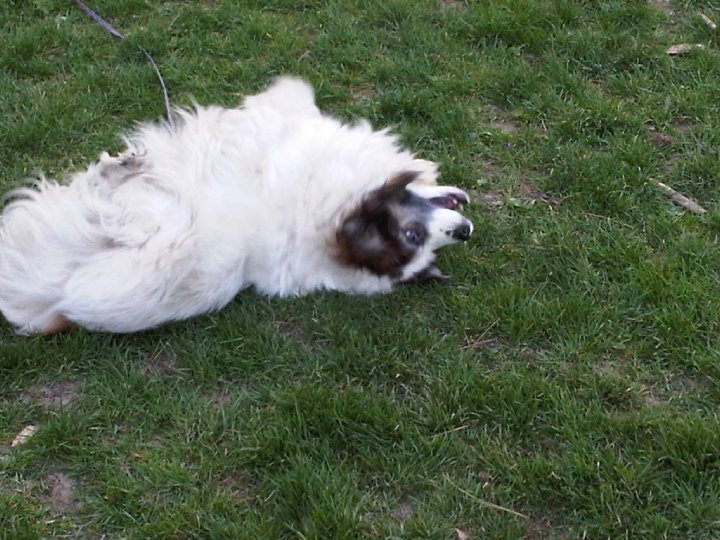
Rest in Peace, Lilly

Saturday, 21 May 2011

Animal Welfare Post: Why No-Kill? (Updated)


There are many justifications for preferring a "No-Kill" approach to animal sheltering. First, there is the utilitarian argument based on numbers that it simply isn't true that "you can't save them all." If in fact you can save them all through the application of No-Kill principles, then the numbers will weigh heavily in favour of No-Kill, since countless many more will be saved in a no-kill shelter vs. kill shelters which needlessly destroy saveable animals. I adhere to this view. You can read more about it here:

http://www.nathanwinograd.com/

The more difficult question which perhaps remains academic given my stance with respect to the above justification is where we should fall if it really were true in any given community that not every animal could be saved. Would it then be justified to kill the less marketable ones so that a higher number of animals could be spared?

In my view, even in those circumstances a "No-Kill" approach would be mandated. The fundamental purpose which should guide the governance of any animal shelter should be to serve as an exemplary guadianship relationship between the guiding forces of the shelter (staff, board, volunteers) and the animals it takes under its protection. What I mean by this is that to serve any meaningful purpose, an animal shelter should be a place that truly sets an example of what the human-animal bond can and should be. The basis of such guardianship is a genuine relationship, involving love, trust and respect. Animals are not numbers. They are companions under our protection whom we love and have a very personal sense of connection to.

The reason why I feel this is so important is that it is the only real way that we are going to have any hope of changing widespread attitudes about the role of animals in our lives, regardless of how the numbers currently fall: by actually providing a living example to inspire and instruct the public about what the human-animal bond can be like.

How can we expect society's utilitarian attitudes towards companion animals to ever change if those of us who dedicate our lives to the protection of such animals fall back on the same excuses as the public does in discarding animls? How can we expect the public to be inspired to experience meaningful relationships to their animal companions if we cannot inspire them by the way we regard the animals for whom we care?

For instance, we criticize people for abandoning their pets due to behavioural issues rather than working with them. So what message does it send when shelters (who purport to love animals more than the average citizen does) do precisely the same thing by euthanizing the animals who are not immediately adoptable for behaviour reasons rather than lovingly working to rehabilitate them, with patience and understanding concerning the origins of their lack of trust in the failings of humans to have guided them? We are incensed and horrified when people abandon their pets because it is too much trouble to care for them when their pets age or suffer from medical issues. Yet what message does it send when senior and special needs animals are weeded out in shelters in favour of the more marketable, younger and healthier animals?

It is unacceptable for shelters simply to become thrift shops for discarded animals. That does nothing to address the real issue. What must be done is transformative. Shelters must not passively hold unwanted pets in the hope that someone might want them, thereby saving the lucky ones and regretfully saying goodbye to those who could not capture the imagination of a member of the public to take them in. Rather they must generate something that was not there before: an exemplary relationship which can serve as a source of inspiration and education for members of the public who might not otherwise feel this connection.

When I took my special needs dog Lilly home with me, everywhere I went I encountered people who would NEVER have dreamed of considering an older dog (with cancer no less). Yet by observing my example (and the example of the shelter which gave her a chance), they became inspired to think about animal guardianship in a different way. Suddenly the beauty of saving a life as precious as hers so obviously was planted a seed inside their imagination, which I have no doubt will lead to more compassionate choices in at least some of them. This is what shelters must do if we are ever to have hope not only in maximizing the number of animals that can find their way into homes but also in transforming the attitudes that lead them to be abandoned and overlooked in the first place.

Most importantly, it's just the right thing to do if we truly love animals. Betrayal of the trust of those whom we love is simply not an option. What we need to do is to find a way to transmit this vision to others and inspire them to share in it. This can't be done in an environment where the killing of those whom we purport to protect is a routine occurrence. We will never inspire anyone that way. On the contrary, people will exercise their option of simply turning away, feeling defeated, because what we are showing them is too ugly to face. Instead we need to show them the beauty in the true bond between animals who would not otherwise have a chance, and the people who love them. Only in that fashion will we inspire and transform rather than simply reshuffle.


***Addendum May 22: Another point is that when kill practices are employed, so much creative energy that could otherwise go to saving animals is lost. Staff and volunteers become depressed and traumatized by seeing the animals with whom they have formed a bond be destroyed. They therefore disengage or leave altogether. The shelter becomes a depressing place that people don't want to visit or think about. If they do attend there to save an animal or assist in some way, they will not be inclined to linger. A No-Kill approach changes this dynamic by cherishing each life within the shelter walls and nourishing the bond that forms between the animals and staff, volunteers, and members of the public, thereby creating a positive energy that can be harnessed to save more animals. The shelter becomes a positive place, full of inspirational stories that people want to be a part of. This is the kind of shelter that people want to visit and where people want to linger. The compassion fatigue that characterizes so many shelter workers and volunteers (and members of the public who visit shelters) is replaced with a positive energy, nourished by the successes that are enjoyed and celebrated. This then equips participants with greater emotional capacity to expand the shelter's ability to help more and more animals.

In Praise of Hypocrisy


I am getting very tired of being accused of being a hypocrite. It so happens that I am a vegetarian and an on-again, off-again vegan. Currently, I am on week five of being vegan and plan to remain so for the rest of my life if I can.

Yet, as those who learn of my "alternative lifestyle" are so swift to point out, there are many ways in which this makes me an absolute hypocrite. For instance, in the past, I have purchased leather shoes, which I still happen to own and likely will still choose to wear.

I can't pretend to have any justification for having made these purchases. Given my values at the time, I was undeniably a hypocrite. I found a good deal and chose to turn a blind eye to the moral implications of my purchase.

If you ask how I reconcile this uncomfortable truth, my answer will be as follows: In my honest opinion, all the best people in this world are in a constant state of hypocrisy.

The fact of the matter is that we are not born morally neutral. From the very start, we are part of a system that is inherently flawed. We consume things that have been created and supplied to us as a result of horrible injustices. We benefit from privileges gained at the expense of people who suffer. We inherit a history that was built on shocking wrongdoings that shape our current uderstanding and behaviour. As a result, even our most passive behaviour is fraught with morally questionable dimensions.

For those of us who attempt to pull ourselves out from this web of moral failings by first becoming morally aware, the immediate consequence will be to plunge us into a state of instant hypocrisy. Our newly formed or newly expanded moral consciousness will undoubtedly be in conflict with so many other aspects of our practices which have not yet been subjected to similar scrutiny. Moreover, some practices will be easier to give up, while others will take more work. When we are first starting out, we will naturally start with the easiest aspects of ourselves to change before tackling those which are more challenging. As we progress towards the goal of perfection, we will consequently be plagued by moral failings when judged by our own moral standards.

Somehow, in the eyes of some, this unavoidable state of hypocrisy appears to be an irrefutable argument in favour of shutting down any such moral awakenings. You are a vegetarian but you have leather shoes, the critics will say, as though this is somehow an argument in favour of abandoning the vegetarianism altogetherin order to be free of contradictary practices--in order to be safe from being labelled a hypocrite. But my reply is: I became a vegetarian because of my moral stance on this issue. It may very well be that I am an utter failure in living up to this belief. I will therefore be deserving of criticism. But abandoning the lifestyle that was inspired by that moral belief will just put me even more afoul of my beliefs.

Simply put, the absence of hypocrisy is not a moral virtue in itself, but is rather an indication of a complete absence of any real morality. Those who never challenge themselves to any kind of moral awakening are blissfully unhypocritcal simply because they never commit to any morality of substance that could put them into conflict with themselves. Because they do not really believe in anything, or at least never believe in anything that departs from the practical reality that they inhabit, they can never be accused of having moral beliefs that conflict with their conduct.

The real heroes in my view are the ones who recognize the uncomfortable and sometimes painful truth of the situation and yet bravely labour through it. To loosely quote Dostoevskys Father Zosima (from my favourite book ever, The Brothers Karamazov): each is responsible for everything and I more than anyone else.

We are all implicated in the injustices in this world. From that starting point, the question is not how morally perfect and consistent we are, but rather how we can begin the lifelong journey of disentangling ourselves from that web. This is a journey that is never finished. We just do the very best we can to do better each day.

The corrollary of this is a more compassionate perspective on the moral failings of our fellow beings. We all are hypocrites. We all fail horribly to live up to our own ideals in so many respects. I might avoid animal products, but before I start to gloat about that, I should humble myself by recalling my thusfar unacceptable ignorance of the injustices in our foreign policies, etc., etc. The real measure by which to judge each other's morality is the extent to which we try to do as much as we can, to face up to and resolve the contradictions, however slow and difficult that process may be.


It also involves a more compassionate approach to our own moral development. I am inherently a hypocrite, but if I let that undermine my sense of moral self-worth, then I will remain mired in a state of the most extreme immorality. The only moral option is the one that moves forward without harsh judgments. If we cant achieve perfection, then we will face this reality with eyes wide open and aim to simply do the very best we can in the circumstances until we find strength to do better. What we require is not moral consistency but moral courage.

The aim then is to acknowledge our own hypocrisy and refuse to fear it, while at the same time not allowing ourselves to become dull to the sense of responsibility (and yes guilt and pain) that are intrinsically part of the process: the pain involved in breaking the shells of our own understanding.....